

MAIN TECHNICAL ARTICLE
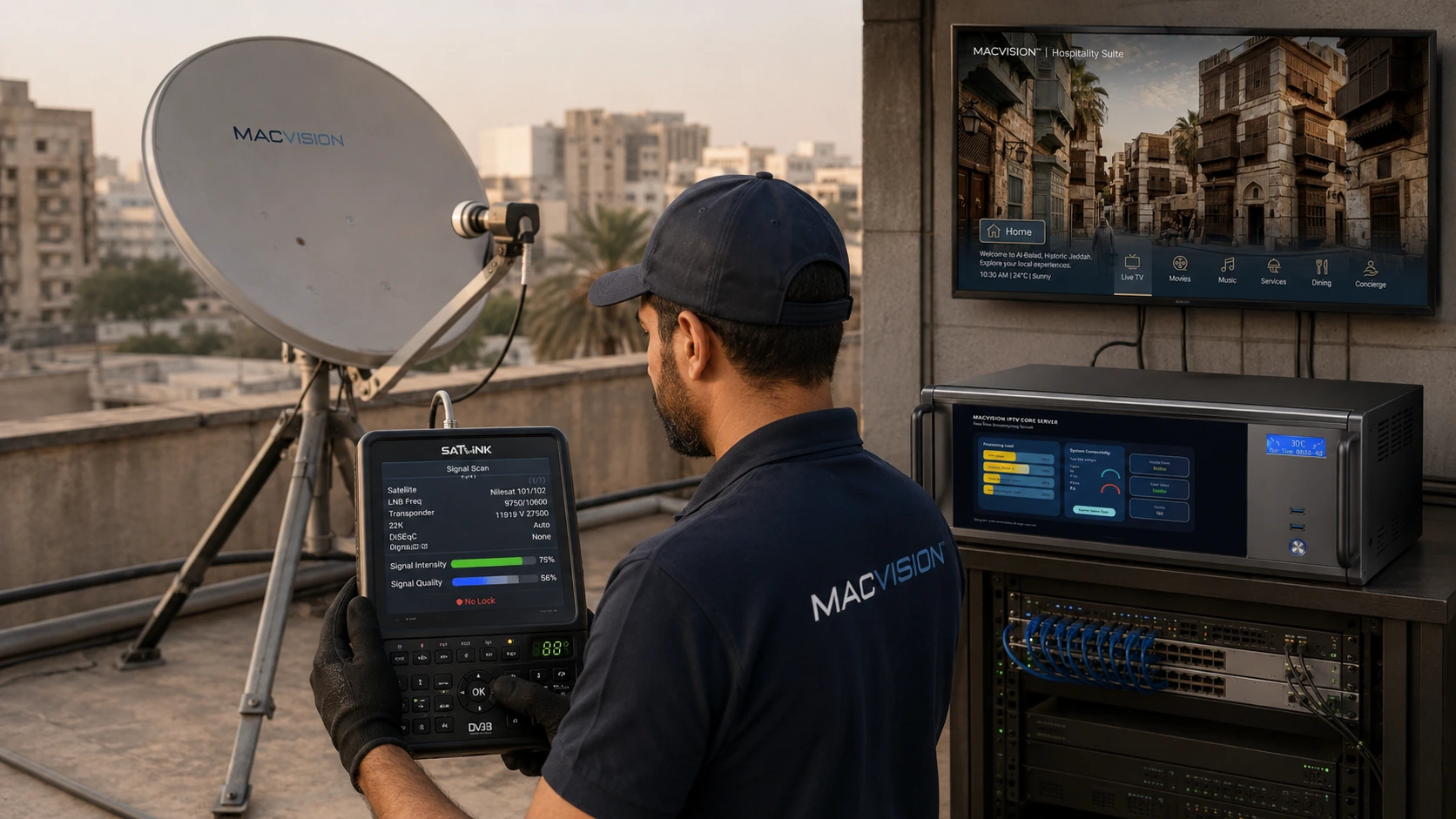
Basic signal finders respond to RF energy and cannot always identify the satellite. In locations where several satellites are close in orbital position, an installer can obtain a strong reading from an adjacent satellite and assume the dish is correct. The headend then fails to lock expected transponders or finds an unfamiliar channel list. Reliable identification requires locking a known reference transponder and verifying network information, not relying on tone or strength alone.
Why does a dish finder show a strong signal when none of the required IPTV channels scan?
Answer: The finder may be detecting another satellite, terrestrial interference, an amplifier output or broadband noise. Adjacent satellites can produce similar strength at the reflector, especially with a small dish or wide beamwidth. A strong tone therefore confirms only that energy is present. Enter a unique reference transponder for the target satellite and verify its frequency, symbol rate, polarity and network identity. If it does not lock, the dish must be moved even if the analog signal indication is high.
How can an installer prove that the dish is pointed at the correct satellite?
Answer: Use a professional meter with satellite identification or tune several known transponders that are unique to the target orbital position. Confirm the displayed network name, original network ID and recognizable free-to-air services. Check both polarizations and both bands because one accidental carrier is not sufficient proof. In a multi-satellite system, label the feed only after the correct orbital slot is confirmed. This prevents a wrong feed from being connected to a DiSEqC or multiswitch input and later misdiagnosed as a headend fault.
What should be done if the wrong satellite was connected to the IPTV headend?
Answer: Disconnect or isolate the feed to avoid accidental rescanning into the production database. Repoint and peak the dish on the correct satellite, set LNB skew and test the required transponders. Reconnect the cable to the intended switch port, verify DiSEqC or input selection and clear any incorrect scan results. Restore the approved service list from backup if necessary. Finally confirm that existing channel numbers and multicast addresses still refer to the correct programs before releasing the system to guest televisions.