

MAIN TECHNICAL ARTICLE
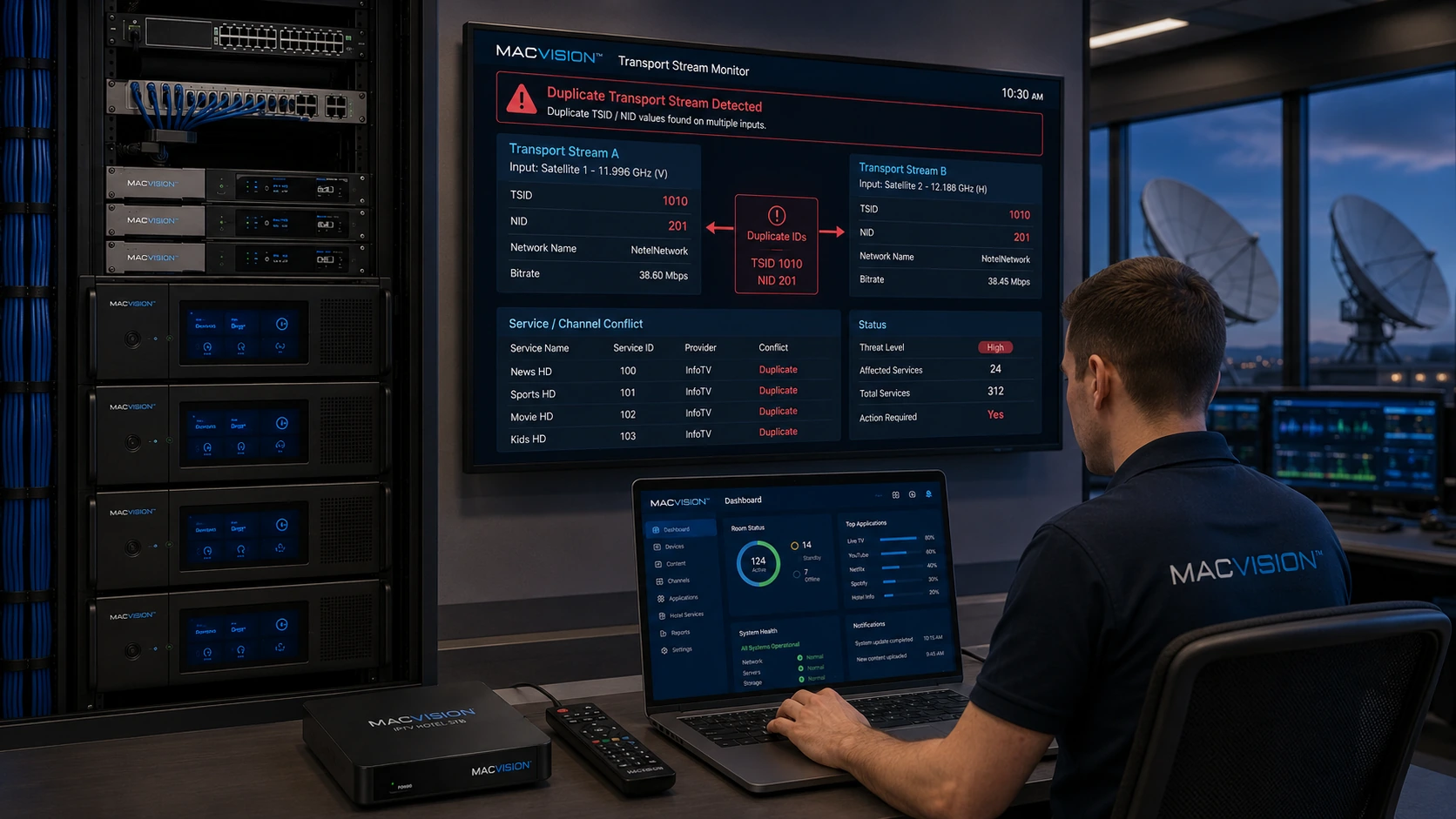
Transport stream ID and original network ID help receivers distinguish services, but different operators or remultiplexers can reuse values. When multiple satellite sources are combined without normalization, duplicate identifiers can confuse service databases, EPG mapping and middleware imports. The issue is more likely when headends pass complete transport streams or merge services from several orbital positions into one logical network.
How do duplicate TSID or ONID values affect an IPTV channel database?
Answer: Systems that identify a channel by the combination of network, transport stream and service IDs may treat two different services as the same object. One channel can overwrite another, EPG data can attach to the wrong service or a rescan can create unstable duplicates. The video stream itself may still play, making the database symptom difficult to trace. Inspect the identifiers from each source and review how the middleware constructs its unique channel key.
How can duplicate broadcast identifiers be detected in a large headend?
Answer: Export service information from every input and compare ONID, TSID and service ID combinations. A transport-stream analyzer or headend inventory tool can automate the comparison. Pay particular attention to remultiplexed local feeds and channels from different satellites with generic IDs. Also search the middleware database for multiple records sharing the same identifier but different source addresses. Perform the audit before a bulk rescan, because automatic imports can overwrite existing mappings.
What is the correct way to resolve identifier collisions?
Answer: If the headend supports remultiplexing, assign unique network and transport identifiers and regenerate consistent PAT, PMT, SDT and related tables. Otherwise configure the middleware to use a unique source key that includes input, multicast address or another stable identifier. Do not change IDs blindly on encrypted services or pass-through streams without verifying decoder compatibility. After correction, rebuild the affected channel and EPG mappings and test that rescans no longer merge the two services.