

MAIN TECHNICAL ARTICLE
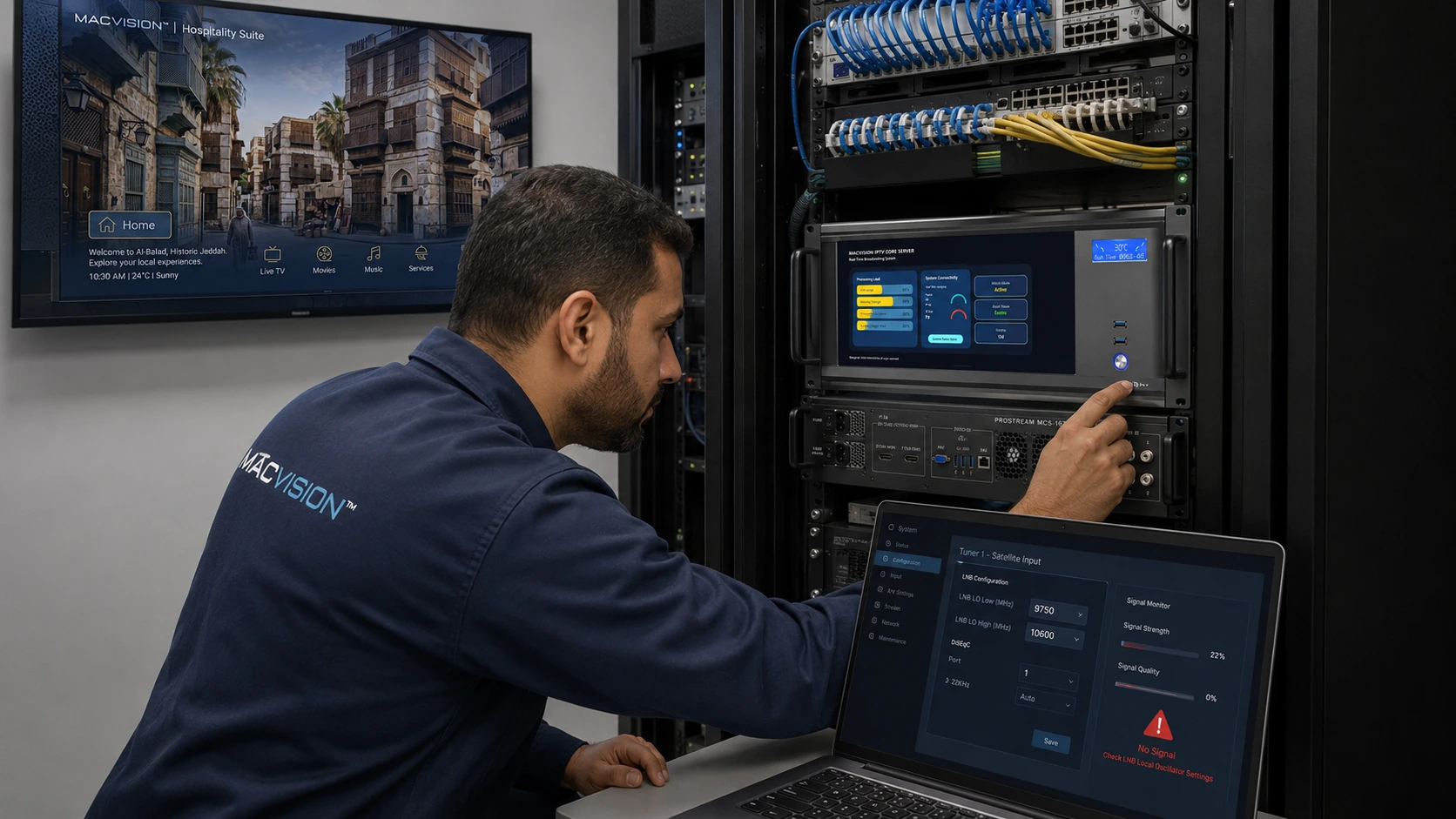
The headend calculates the tuner intermediate frequency by subtracting the configured LNB local-oscillator frequency from the satellite downlink frequency. If the configured value does not match the installed LNB, the tuner searches the wrong location in the IF spectrum. This can produce complete lock failure, channels listed under incorrect frequencies or partial success when a nearby carrier is found by chance. Universal, single-oscillator, wideband and specialized LNBs therefore require different configuration profiles.
What symptoms indicate that the LNB local-oscillator value is configured incorrectly?
Answer: Common symptoms include failure to lock every transponder in one band, a consistent frequency offset, unexpected services appearing during a scan or channels that work only when entered with nonstandard frequencies. The RF strength may look normal because the physical signal is present. Compare the installed LNB label with the headend profile and calculate the expected IF for a known transponder. If the measured carrier and configured tuning point differ by the local-oscillator error, the configuration is incorrect.
Why can some channels still work with the wrong LNB frequency setting?
Answer: Automatic scan ranges and wide tuner capture windows can occasionally locate a carrier despite a small configuration error. In other cases, the wrong calculated IF may coincide with another transponder, so the tuner locks a service that was not intended. This partial operation is unreliable and can fail after firmware updates or rescans. A professional installation should not depend on blind-scan correction; it should use the exact low- and high-band oscillator frequencies, band-switch threshold and LNB type specified by the manufacturer.
How is an LNB oscillator mismatch corrected without disrupting the IPTV lineup?
Answer: First record the existing channel-to-service mapping and identify which tuners use the affected input. Correct the LNB profile, then retune reference transponders manually before launching a full scan. Confirm service IDs and PIDs so the middleware lineup does not create duplicates after rescan. Where channels are already published to multicast addresses, update the tuner source while preserving the output IP and port assignments. Validate every affected service for video, audio and EPG before deleting the old scan entries.