

MAIN TECHNICAL ARTICLE
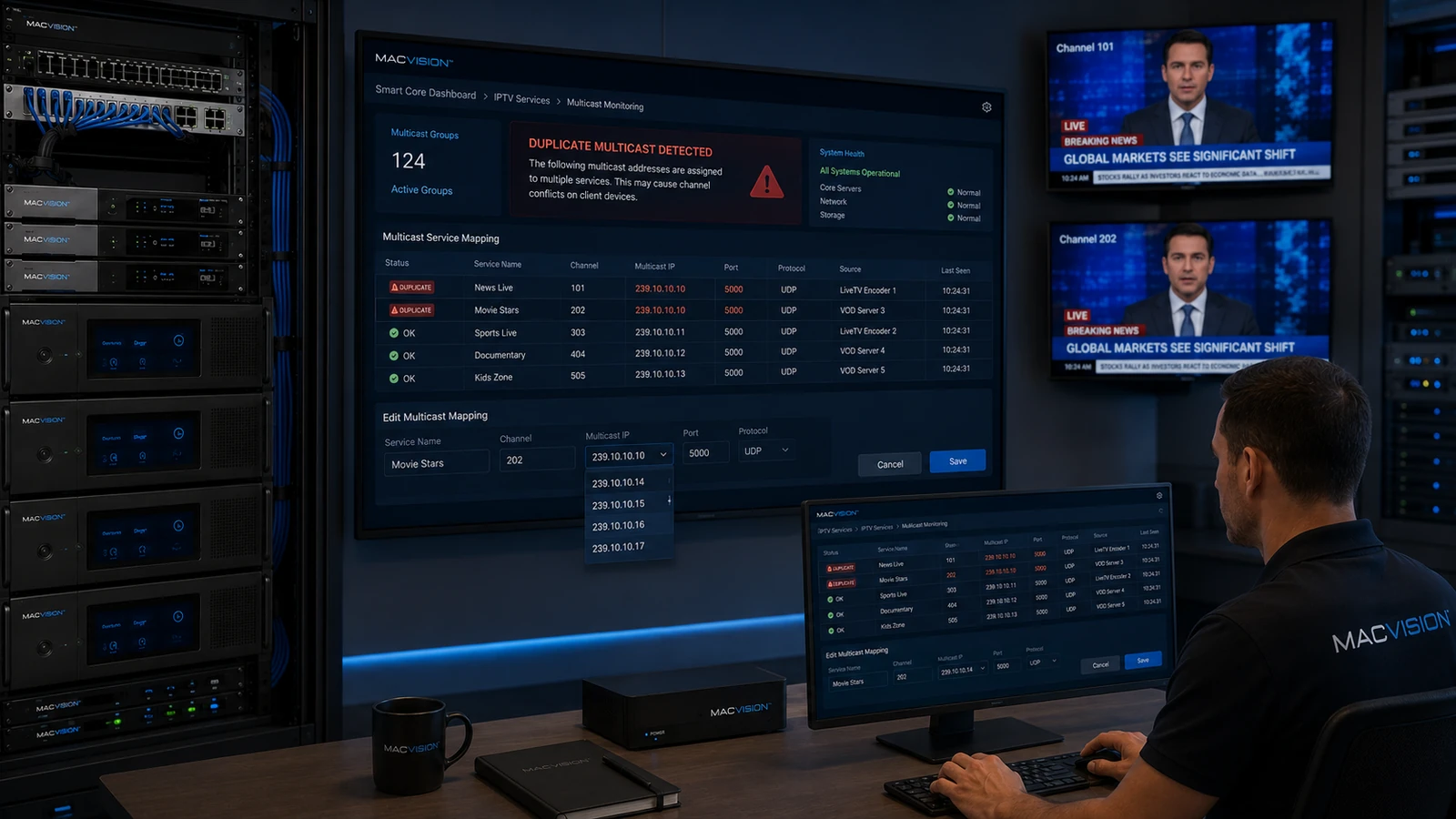
Each live IPTV service should have a unique and controlled destination address and port within the designed multicast scope. Reusing an IP and port for two encoders, entering the wrong address in middleware or mixing RTP and raw UDP expectations can make channels overwrite each other, switch unpredictably or show no picture. Address planning and source validation are essential when headends are expanded or restored from backup.
What happens when two IPTV channels use the same multicast IP and UDP port?
Answer: Receivers joining that group can receive packets from both sources. Sequence numbers, timestamps and payloads collide, so the decoder may show one channel intermittently, severe corruption or no usable video. Switches will not distinguish the programs because the destination is identical. Use packet capture to identify multiple source IPs transmitting to the same group and port. Stop the duplicate source before changing middleware entries, then assign a unique destination according to the network address plan.
Why can a channel work in VLC but fail through the middleware after an address change?
Answer: The direct player may be using the new URL while the middleware database, TV application cache or proxy still references the old address. The URL syntax may also specify RTP when the source is raw UDP, or omit a required interface. Compare the exact source, destination and port at every stage. Clear or version the channel configuration only after confirming the headend sends the intended packets. Avoid creating a second channel record when the correct action is to update the existing mapping.
How should multicast addresses be allocated for a 75-channel IPTV lineup?
Answer: Reserve a documented address range, assign one unique group and port per service and record the encoder source IP, VLAN and channel ID. Exclude addresses used by network protocols or other systems and apply routing boundaries deliberately. Use a consistent numbering scheme without deriving security assumptions from obscurity. Before commissioning, scan for duplicate transmitters and verify each group carries only the intended program. Maintain the registry whenever channels, backup encoders or test streams are added.