

MAIN TECHNICAL ARTICLE
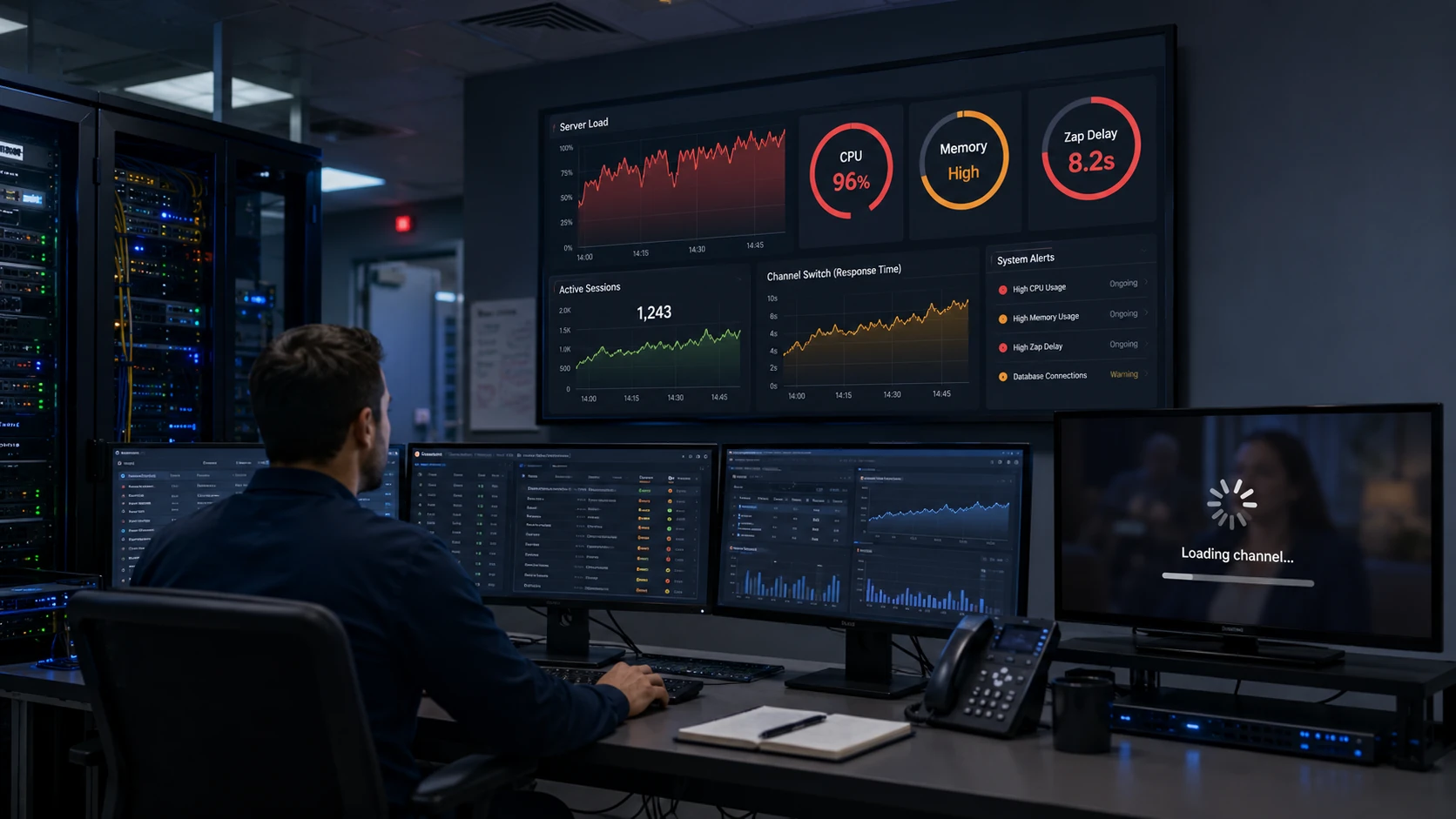
Middleware servers handle device sessions, authentication, channel metadata, application assets, logs and sometimes media proxying or transcoding. High CPU, memory pressure, database contention, storage latency or licence/session limits can delay channel requests even when the multicast network is healthy. The symptom is often slow menus, delayed authorization or inconsistent switching across many devices rather than corruption in one specific stream.
How does middleware overload appear to hotel guests?
Answer: The interface may load slowly, channel selections can pause before playback starts, room services may time out and some TVs can show authentication errors. Once the stream begins, it may play normally if media flows directly from the headend. This distinction separates control-plane overload from network packet loss. Review server response time, database queries, CPU, memory, disk latency and active sessions during peak usage.
Why can rebooting the middleware server improve switching only temporarily?
Answer: A restart clears caches, leaked processes, queued requests and memory pressure but does not remove the underlying capacity or software problem. Load builds again as devices reconnect. Determine whether a specific service leaks resources, a database index is missing, logs fill storage or media proxying exceeds design capacity. Use performance history rather than repeated reboots, and schedule any software fix or scale-out change with rollback protection.
How should middleware capacity be planned for a large property?
Answer: Count registered devices, peak concurrent sessions, channel requests, API integrations, PMS transactions, application assets and any proxied media. Include startup storms after power restoration and future room growth. Provide redundant network and storage paths, tested backups and monitoring. Load-test the actual software version with representative TVs because nominal device limits may not reflect customized interfaces, logging levels or third-party integrations.